COMING SOON · DISTRIBUTED COMMUNITY AI
Smart Atom Retail
Rebooting the high street with shared community AI
What if the first new shop on an empty high street wasn't another retailer — but the infrastructure that helped the rest come back?
Smart Atom Retail turns a vacant shop into a Smart Atom Hub — shared local AI, compute, connectivity, digital skills and business infrastructure for the surrounding community.
One empty shop becomes a digital anchor.
Residents can access useful AI.
Local businesses can share capabilities they might not be able to justify alone.
Neighbouring empty units can connect to the same infrastructure.
And new types of businesses and community services become easier to establish.
Free community AI for the AI age — like free Wi-Fi, but built for what comes next.
COMING SOON
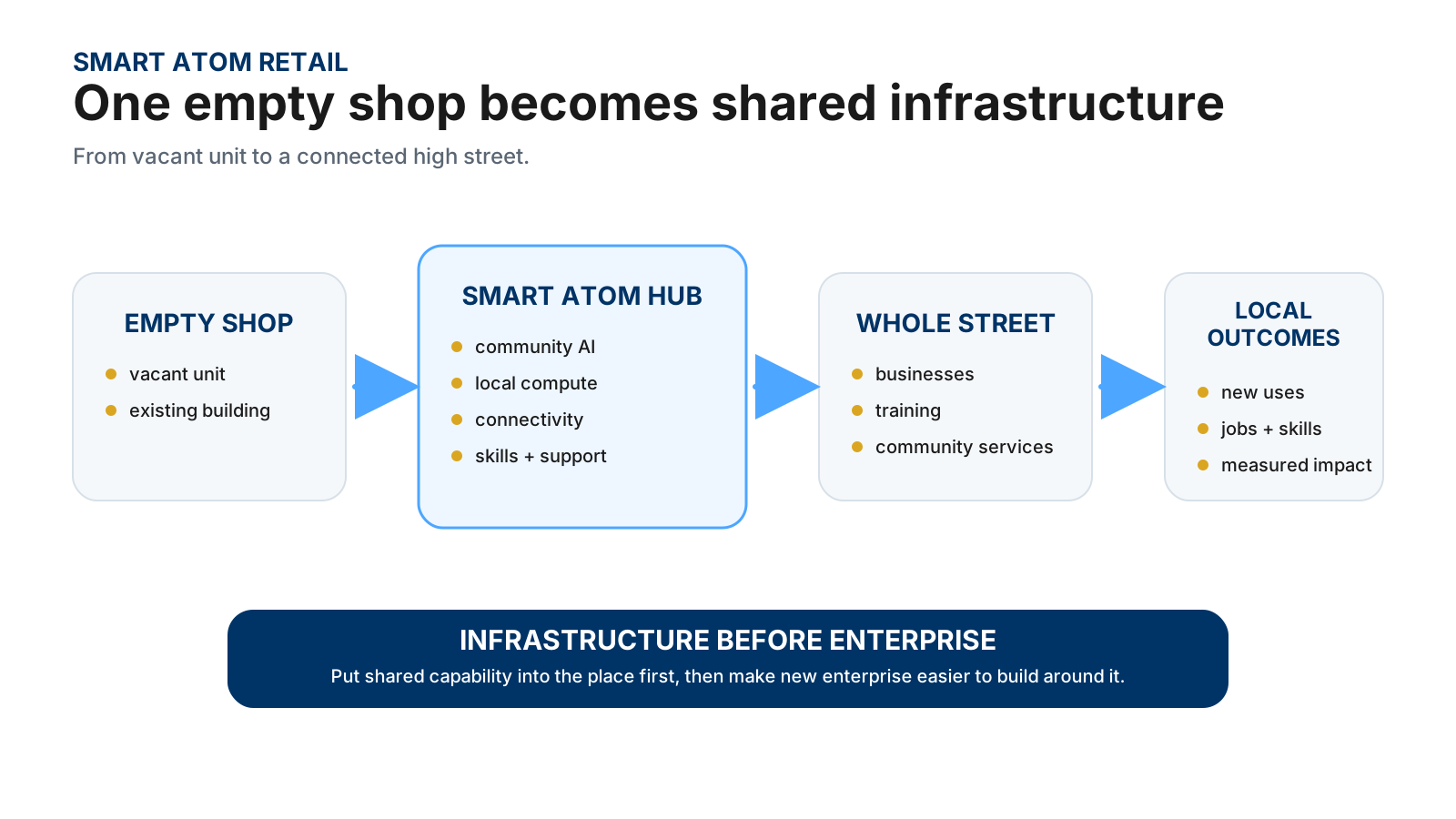
One empty shop can help restart a whole street
High-street regeneration usually begins by trying to find another tenant for every empty unit.
Smart Atom Retail starts somewhere different.
Infrastructure before enterprise.
Turn one vacant shop into shared twenty-first-century infrastructure.
Then make it easier for businesses, entrepreneurs, training providers and community organisations to build around it.
EMPTY SHOP
- Vacant unit
- Existing building
SMART ATOM HUB
- AI
- Compute
- Connectivity
- Skills
- Digital services
THE SURROUNDING STREET CONNECTS
- Businesses
- Training
- Community services
- Jobs
- New uses for empty space
Instead of ten small organisations each building ten separate technology stacks, they can share one local infrastructure layer.
Meet the Smart Atom Hub
A Smart Atom Hub is the urban and high-street counterpart to our Community Edge AI Container — CEAC.
CEAC provides dedicated community edge infrastructure in a purpose-built container.
Smart Atom Retail takes the same distributed-compute principle and puts it into an existing commercial building.
No BIOQUBE or dedicated biogas system is required.
The shop itself becomes the infrastructure.
A Hub could include:
- local CPU and GPU compute
- high-speed backhaul
- public and business connectivity
- NOVAS community AI
- Sparse applications
- developer facilities
- shared AI workstations
- secure networking
- business automation
- usage metering
- energy and carbon evidence
- secure access
- sponsor attribution
- connections to CEACs
- connections to specialist cloud and remote compute
But Smart Atom Retail is not about filling shops with servers.
It is about putting enough capability locally to make the community useful, then intelligently connecting to larger infrastructure when required.
Not every AI request needs a massive data centre
Britain will need large data centres.
Frontier-model training, very large workloads and specialist services require enormous computing capability.
But that does not mean every AI request needs to travel to one.
Millions of future AI interactions will be much smaller:
- Business automation.
- Local assistants.
- Education.
- Coding.
- Document processing.
- Community services.
- Creative applications.
- Routine inference.
Smart Atom Retail introduces another layer.
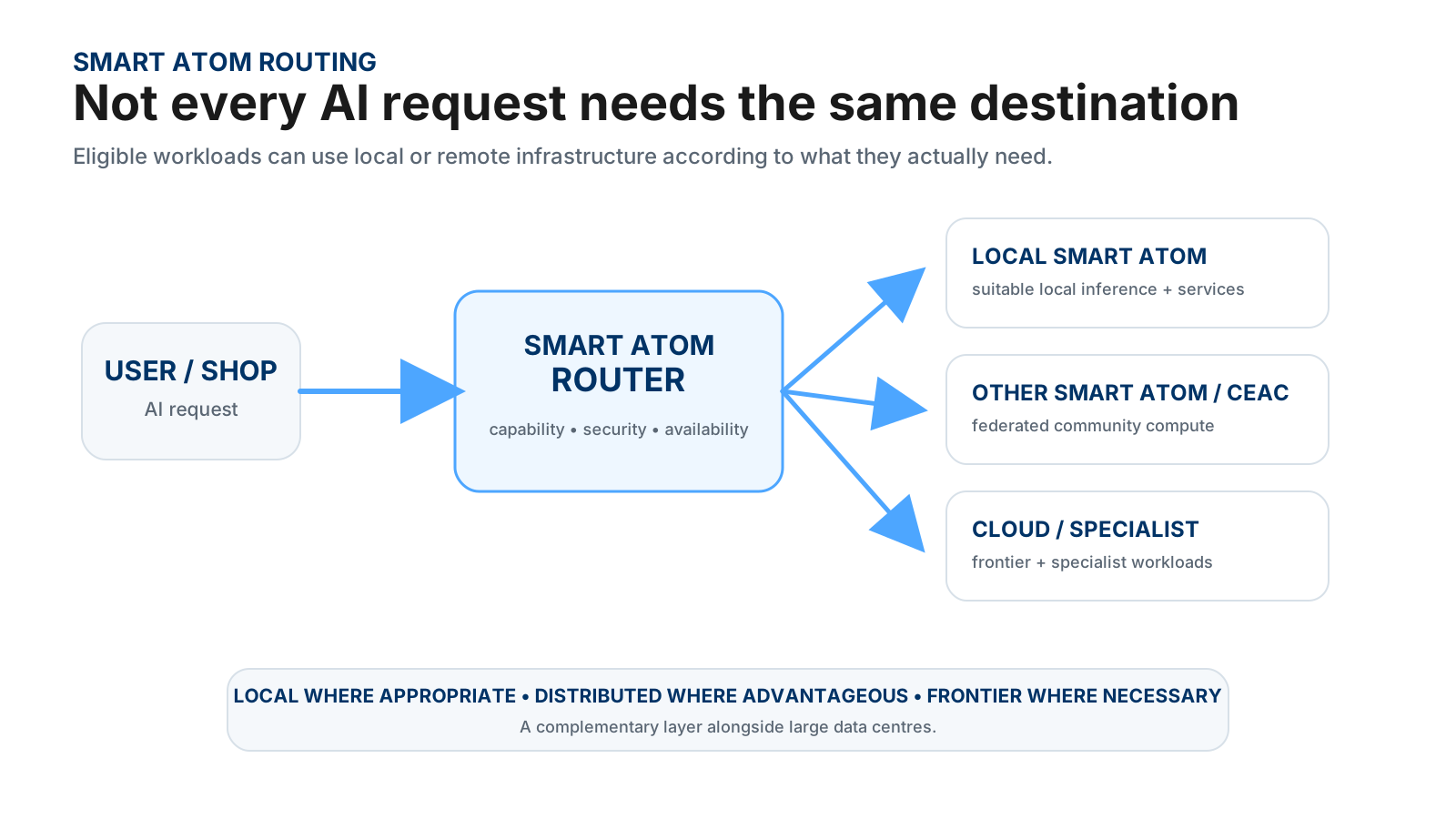
USER
AI request
SMART ATOM ROUTER
Capability · security · availability
LOCAL SMART ATOM
Suitable local inference + services
OTHER SMART ATOM / CEAC
Federated community compute
CLOUD / SPECIALIST COMPUTE
Frontier + specialist workloads
The system can select an appropriate execution location rather than assuming remote hyperscale infrastructure every time.
Local where appropriate. Distributed where advantageous. Frontier where necessary.
That creates a complementary model for Britain's AI infrastructure.
Not data centres or Smart Atom.
Data centres and Smart Atom — each doing the work they are best suited to.
Build capacity where demand exists
Traditional infrastructure can require enormous amounts of capacity to be planned before the first user arrives.
Smart Atom Retail can grow differently.
01
1 SMART ATOM HUB
Creates useful local capability.
02
MORE HUBS JOIN
Capacity and services can be shared.
03
HUBS CONNECT WITH CEAC
A wider distributed compute network develops.
04
REGIONAL FEDERATION
More locations, more capacity and more resilience.
05
DISTRIBUTED UK AI INFRASTRUCTURE
Connected to cloud and hyperscale infrastructure whenever required.
The network can therefore grow with demand.
We do not need to build the entire network before the first location becomes useful.
A lesson from Romania
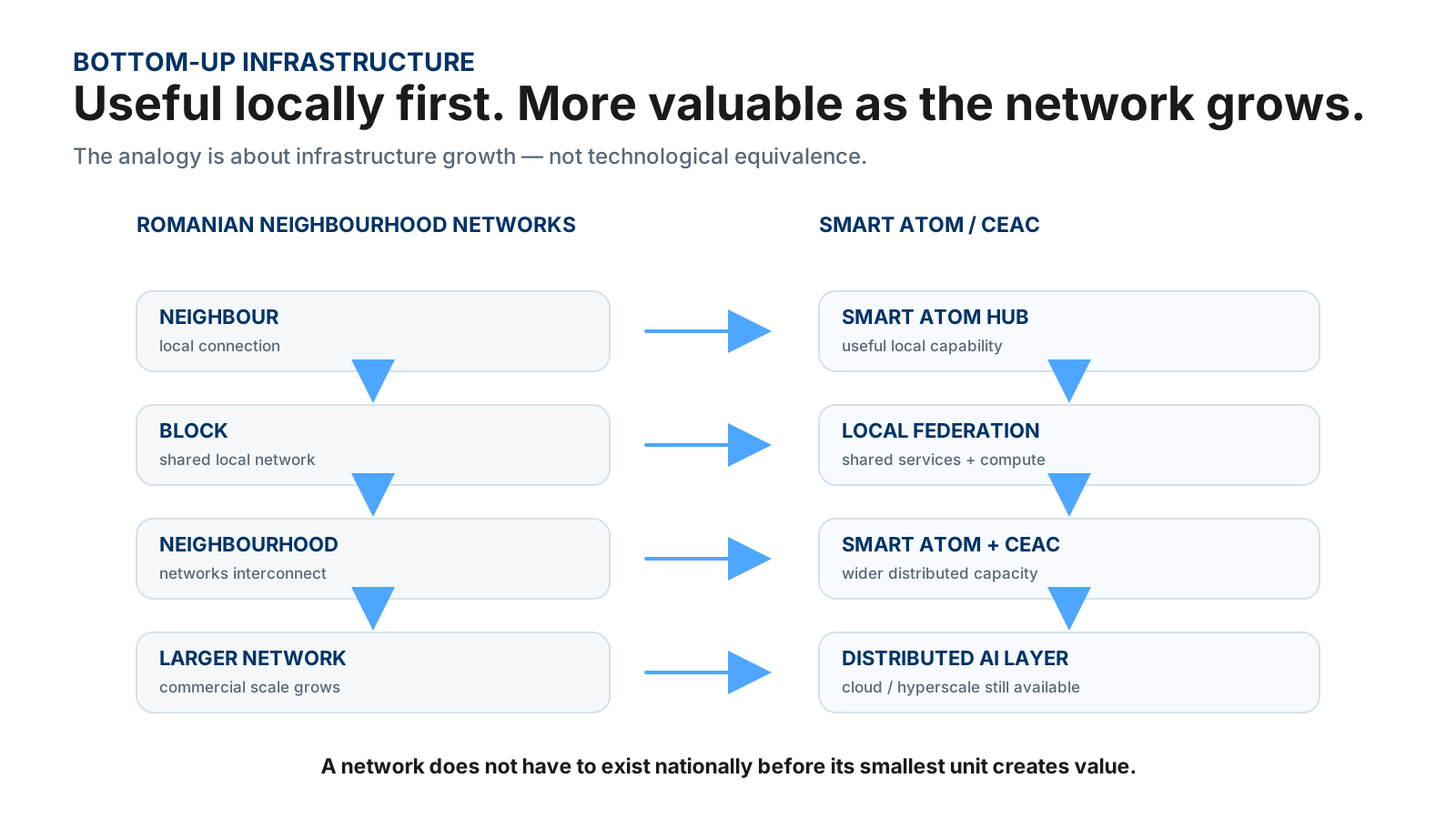
Big digital networks can start small
There is an interesting precedent.
During the 1990s and early 2000s, neighbourhood computer networks began appearing across parts of Romania.
Residents connected apartment blocks and local communities together.
Some shared internet connections.
Some grew into local service providers.
Networks connected to other networks.
Larger commercial infrastructure followed.
Romania's later broadband success had many causes — including fibre investment, competition, regulation and falling technology costs.
But its neighbourhood networks demonstrated an important principle:
A digital network does not have to exist nationally before its smallest unit creates value.
Smart Atom Retail applies that principle to AI infrastructure.
Romania's neighbourhood networks helped democratise access to bandwidth.
Smart Atom Retail asks whether a similar bottom-up approach can help democratise access to compute and artificial intelligence.
The analogy is about infrastructure growth rather than technological equivalence. Broadband networks and AI compute have different technical and economic characteristics, and the performance and benefits of Smart Atom infrastructure must be demonstrated independently.
The whole street can connect
The Smart Atom Hub is not intended to be an isolated destination.
It can become shared infrastructure for other businesses and organisations around it.
Each shop can be independently operated.
Each can serve a completely different purpose.
But underneath them can sit the same shared digital infrastructure.
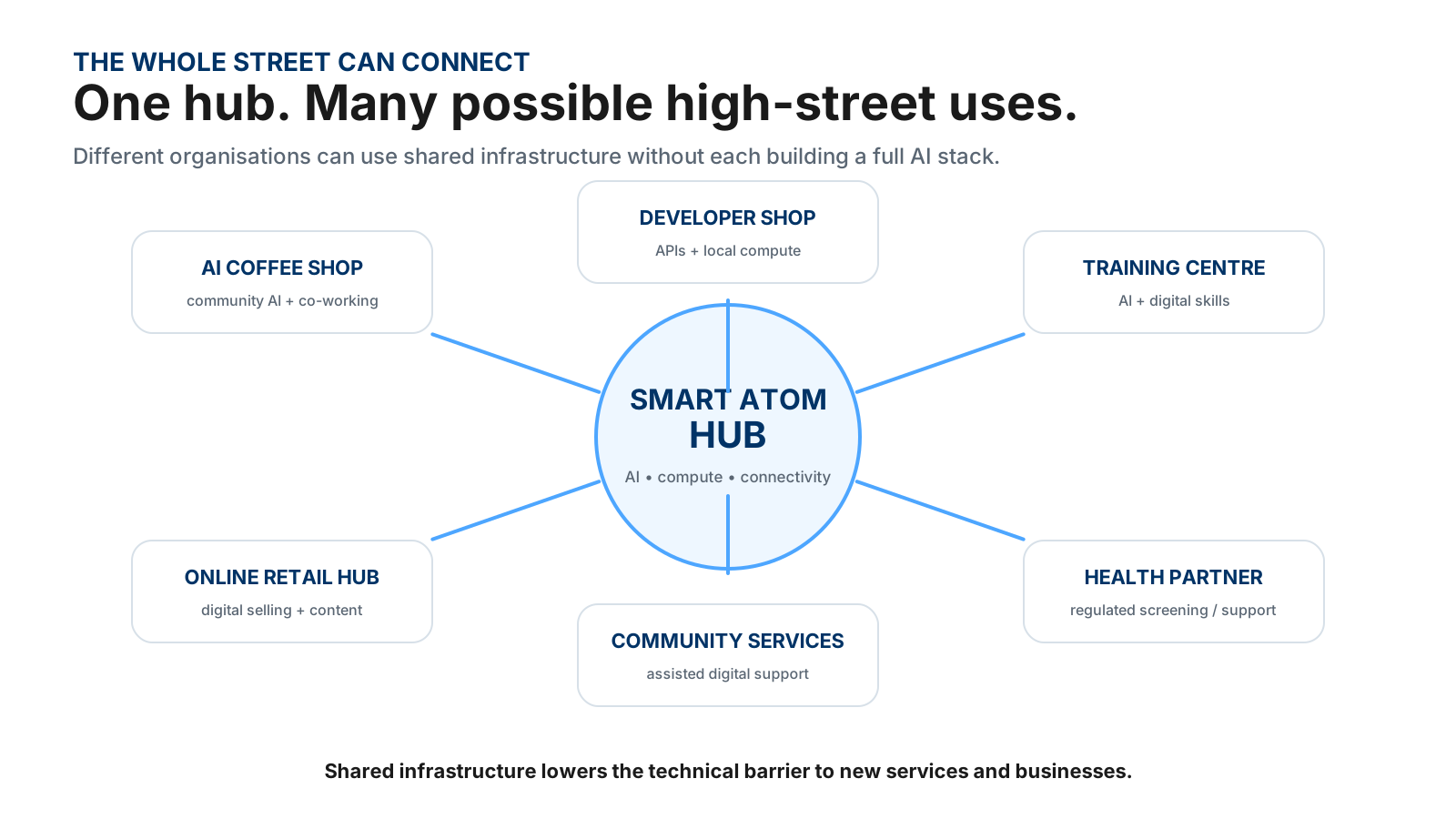
New kinds of high-street businesses
AI Coffee Shop
Coffee, co-working and accessible AI.
People could use community AI, learn how new tools work, attend sessions or simply get help doing something useful.
Start-up Café
A place to turn an idea into a business.
AI-assisted research, planning, marketing, subscribers administration and digital tools can reduce the cost of getting started.
Developer Shop
Affordable development space with APIs, compute, coding environments, hack nights, prototyping and access to Sparse infrastructure.
Technology businesses can start on the high street rather than disappearing into anonymous offices.
Online Retail Hub
A physical base for businesses selling online.
- Product photography.
- Listings.
- AI-assisted copy.
- Customer service.
- Digital marketing.
- Workspace.
- Fulfilment support.
The online economy can gain a physical high-street presence.
Creator Studio
Shared facilities for:
- Video.
- Podcasts.
- Graphics.
- Design.
- Local media.
- AI-assisted content creation.
Instead of every creator purchasing specialist equipment that sits idle most of the week, infrastructure can be shared.
Training Centre
- AI literacy.
- Digital skills.
- Coding.
- Business technology.
- Apprenticeships.
- Short courses.
- Practical learning using the same infrastructure supporting the community around it.
Council & Community Hub
A physical location where people can get help accessing digital services.
- Forms.
- Applications.
- Local information.
- Government services.
- Employment support.
- Community organisations.
Technology should not remove the human route.
Smart Atom Retail can provide both.
Health & Screening
Could part of the future high street help keep people healthier?
Smart Atom Retail could also provide suitable digitally enabled premises for regulated healthcare partners.
Potential uses could include selected:
- screening programmes
- preventative-health services
- health checks
- remote specialist consultations
- digital-health support
- community diagnostic services
- wellbeing programmes
The important boundary is clear.
Smart Atom Retail is infrastructure — not an unregulated healthcare provider.
Clinical decisions, screening protocols, diagnosis and treatment would remain with appropriately qualified NHS or regulated healthcare organisations.
But the high street has some interesting characteristics for community healthcare:
- It is familiar.
- It is accessible.
- It is close to where people already live and shop.
- It often contains vacant property.
- And it can combine physical presence with secure modern digital infrastructure.
A future high street could therefore contain:
coffee · retail · training · business support · AI · community services · preventative health
rather than relying entirely on the retail model of the past.
Free community AI
Like free Wi-Fi for the AI age
Access to advanced AI increasingly depends on subscriptions, devices and technical knowledge.
That risks creating another digital divide.
Smart Atom Retail proposes another model.
A baseline level of useful AI could be provided free at the point of use through participating locations.
People could walk into a Smart Atom location and use AI for:
- learning
- writing
- research
- job applications
- business planning
- digital skills
- coding
- creative work
- forms
- everyday problem solving
The user does not necessarily have to be the person paying for the infrastructure.
Community access could be supported by:
Councils · property owners · regeneration programmes · corporate sponsors · technology partners · data-centre sponsors · universities · charities · employers · social-value programmes
alongside paid commercial services.
Three ways to access Smart Atom
Community
- A free or sponsored foundation layer.
- Community AI.
- Digital support.
- Connectivity.
- Selected applications.
- Training.
Business
- More capability for SMEs and organisations.
- Business AI.
- Automation.
- Storage.
- Higher usage.
- Managed applications.
- Shared compute.
Developer & Specialist
- For people building with AI.
- APIs.
- Development tools.
- Compute.
- Sparse infrastructure.
- Testing.
- Specialist workloads.
Commercial services help support the community layer.
The Smart Atom Router
The computers aren't the clever bit
Anyone can put computers and Wi-Fi in a shop.
The difficult part is securely turning many different computers, users and locations into one usable infrastructure system.
That is the role of the Smart Atom Router — SAR.
It provides the foundation for:
Identity
Knowing who and what is authorised.
Security
Protecting users, organisations and infrastructure.
Workload placement
Selecting suitable compute.
Shared infrastructure
Allowing multiple organisations to use common resources.
Tenant separation
Keeping different users and organisations appropriately isolated.
Federation
Connecting Smart Atom and CEAC nodes.
Execution evidence
Recording what happened and where.
Energy & carbon evidence
Measuring environmental impacts where the data supports it.
Sponsor attribution
Helping show how funded infrastructure is actually being used.
This turns a collection of computers into a network.
Security and access
Shared community infrastructure needs more than a guest Wi-Fi password.
Smart Atom Retail is being designed around secure identity, workload separation, controlled access and evidence.
Secure areas may also use our newly developed Heartprint contactless sparse radar verification technology as an additional access factor.
A user first claims their identity using an access credential such as a PIN.
Heartprint can then scan characteristics associated with their live heart activity and compare the radar scan with the enrolled template for that claimed person.
It is designed as an additional verification layer — not anonymous radar identification, not Heartprint-only unlock and not medical validation.
Any live biometric verification deployment would require the appropriate privacy, governance and data-protection controls.
Explore CEAC physical security
Evidence before claims
Smart Atom is being developed around a simple rule:
Measure first. Claim second.
Our infrastructure work already includes qualification and evidence for areas including:
- authenticated routing
- encrypted federation
- hybrid post-quantum transport
- safe failover
- deterministic workload placement
- execution receipts
- physical two-machine LAN locality testing
There are also things we deliberately do not yet claim.
We do not currently claim that Smart Atom has demonstrated:
- national internet bandwidth reduction
- WAN savings
- lower carbon for every workload
- production-scale Smart Atom Retail deployment
Those are questions for real pilots and measured evidence.
The environmental principle is particularly important.
Local does not automatically mean lower carbon.
A well-utilised large data centre can sometimes be more efficient than poorly utilised local equipment.
Smart Atom is therefore designed to compare alternatives rather than assume the answer.
Share more. Duplicate less.
There is a wider infrastructure principle behind Smart Atom Retail.
If 100 businesses each need occasional AI capability, it may make little sense for all 100 to purchase separate hardware that spends most of its life idle.
Shared infrastructure creates another possibility.
- Fewer duplicated systems.
- Higher utilisation.
- Shared connectivity.
- Shared expertise.
- Shared applications.
- Shared compute.
- And access to larger infrastructure when needed.
The aim is not simply to put compute closer.
It is to get more useful work from the infrastructure we build.
A new proposition for landlords
Imagine a property owner with ten empty shops.
The normal question is:
How do we fill ten units?
Smart Atom Retail asks:
Could we use one of them to make the other nine more valuable?
A Smart Atom Hub could provide infrastructure used by surrounding tenants.
Potential benefits include:
- Lower vacancy
- New tenant categories
- Flexible workspace
- Greater footfall
- Regeneration funding
- Sponsor-backed services
- Social-value evidence
- Better use of existing buildings
One unit stops being dead property.
It becomes an enabling asset.
A new tool for councils
For councils, Smart Atom Retail combines several challenges that are often treated separately.
One intervention can potentially contribute to several outcomes.
And because evidence is designed into the infrastructure, a pilot can measure what actually happened.
That could include:
- units reoccupied
- businesses started
- jobs created
- SMEs supported
- people accessing AI
- training hours
- employment support
- community participation
- footfall
- local procurement
- social value
- energy use
- carbon impact
Social value you can see
Funding a community project is one thing.
Knowing what it achieved is another.
Smart Atom infrastructure is being designed to connect:
- 01 · FUNDING
- 02 · INFRASTRUCTURE
- 03 · USAGE
- 04 · ACTIVITY
- 05 · OUTCOMES
- 06 · EVIDENCE
That could help councils, sponsors and partners understand the real-world outcomes generated by their support.
Paid for differently
Smart Atom Retail does not need to depend on one funding source.
A Hub could combine:
COMMUNITY FUNDING
Councils, regeneration and inclusion programmes.
PROPERTY SUPPORT
Landlords and property owners.
SPONSORSHIP
Technology firms, employers and social-value programmes.
COMMERCIAL REVENUE
Business AI, developer services and specialist compute.
TRAINING
Education and skills programmes.
The long-term aim is a model where commercial activity increasingly helps support free community access.
What does a Smart Atom Hub look like?
Not like a data centre.
It should feel more like:
- an Apple Store
- crossed with a community library
- crossed with a café
- crossed with a small technology laboratory.
A typical location might contain:
- Public AI terminals.
- Coffee and co-working.
- Meeting booths.
- Developer benches.
- Training space.
- High-speed connectivity.
- Screens showing live Smart Atom activity.
- A small secure equipment room.
- Local compute.
- Community support.
- Energy and carbon information.
- Partner and sponsor displays.
The technology should be visible enough to inspire curiosity without dominating the space.
One network. Many communities.
Smart Atom Retail does not stop at the shop door.
Over time:
SMART ATOM RETAIL
↕
SMART ATOM ROUTER
↕
SMART ATOM ↔ SMART ATOM ↔ CEAC ↔ CEAC
↕
CLOUD · SPECIALIST AI · FUTURE COMPUTE
Individual locations remain useful by themselves.
The network becomes more useful as more locations join.
That is the central idea behind bottom-up infrastructure.
Start with one shop
Smart Atom Retail does not require a nationwide rollout to begin.
A pilot needs:
- one suitable empty unit
- one willing landlord
- one local authority or place partner
- community organisations
- technology partners
- businesses willing to participate
- and a clear evidence framework established before deployment.
Then we measure what happens.
If it works, replicate it.
If parts do not work, change them.
If a particular service is successful, scale it.
Build what communities actually use rather than guessing what they will need.
SMART ATOM RETAIL
Infrastructure before enterprise.
- One empty shop becomes infrastructure.
- The community gains access to AI.
- Businesses gain shared capability.
- Other shops can connect.
- New services become possible.
- Compute can happen locally when it makes sense.
- Larger infrastructure remains available when it is needed.
And a high street that once represented the decline of one economic era can become part of the infrastructure for the next.
What if the first new shop on an empty high street wasn't another retailer — but the infrastructure that helped the rest come back?
Smart Atom Retail is currently in development as part of the Smart Atom Router and Community Edge AI Container infrastructure programme.